Recommendations clash, opinions pile up, certainty crumbles. On one side, caregivers reassure: a few days are enough to attempt the first outing with a newborn. On the other, voices call to wait, raising concerns about infectious risks and the infant’s pace. Between family traditions and national habits, benchmarks blur, leaving many parents at the threshold, torn between the desire to go out and the fear of doing it wrong.
Contemporary positions are primarily based on understanding the baby’s developing immunity and its gradual adaptation to the outside world. This debate stirs both the choice of the right moment and the concrete organization: location, duration, frequency… every detail affects the serenity of the first walks outside the nest.
Going out with a newborn: recommendations and misconceptions
It’s hard to make a decision as convictions about the “first outing” vary widely. Should we wait a few weeks? Most professionals are more pragmatic: an outing is possible as soon as you’re back home, if the baby’s rhythm allows it and the family feels capable. Breathing some fresh air, encountering new sounds, different lights… this sharpens the senses, promotes sleep, and often provides a little breath of fresh air to parents who need it so much.
Some recommendations consistently come up to choose the best option:
- Opt for short and gentle outings during the first weeks, preferably away from urban hustle.
- Avoid crowded places like public transport or shopping centers, where the circulation of viruses is increased.
- Respect the infant’s condition, sleep rhythm, and desires, without forcing anything.
- Consult the pediatrician in case of specific doubts (prematurity, fragility, medical history…)
Regarding the BCG: it is not absolutely required before the first walk, even if it reduces certain infectious risks. And sometimes, the equation plays out elsewhere: anxiety, too-short nights, or feelings of exhaustion can lead to postponing the big outing, until one gets their bearings. For those who want to delve deeper or verify specific information, simply consult Ma Vie de Famille.
When to go out and where to take an infant?
It’s difficult to apply a universal rule since each family context is unique. But some reassuring benchmarks exist: avoid extreme weather, favor mild days without precipitation, and spare yourself from pollution or heat waves. Comfort, humidity, and the tranquility of the surroundings all matter. A patch of greenery, a shaded path, or even a quiet courtyard remain ideal environments: calm without isolation, light without excess, airy space.
The route and duration should then adjust to the little one’s rhythm. It’s better to prefer a short outing, in sync with their alertness or hunger, rather than disrupting everything just to check a box. Above all, never confuse a leisurely walk with an obligatory outing for errands or appointments. Taking the time to differentiate the two helps to relieve social pressure.
The real answer is rarely found in a calendar or a fixed prescription: it arises from listening, small daily adjustments, and the parent-child dialogue that evolves over the days.
First outings with baby: practical tips
Apprehension is common at the beginning, but with a little preparation, everything changes. It’s not about overdoing it: just anticipate essential needs. Watch for the slightest signal, discomfort, a shiver, a craving, and adjust accordingly.
To approach the first steps outside without stress, keep these points in mind:
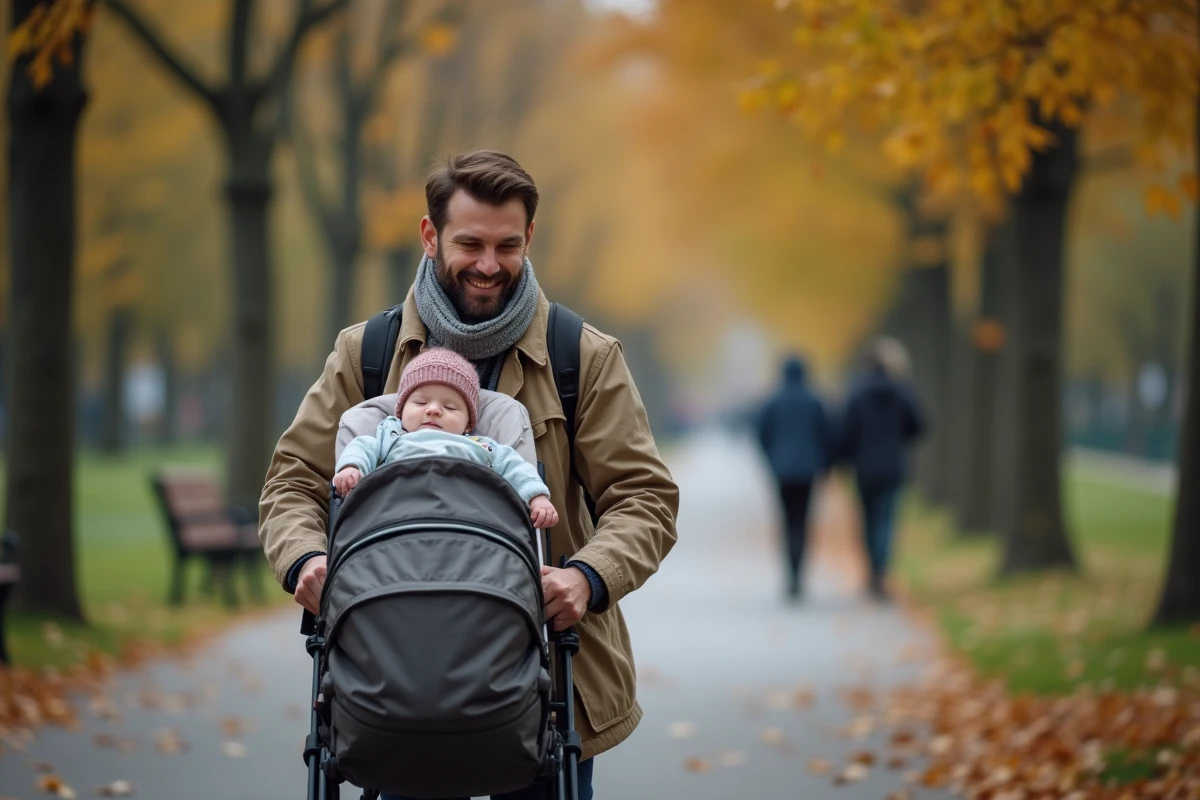
- Dress the baby considering the season: one layer more than for an adult. Winter: hat, sleeping bag, or footmuff; summer: a small hat, sun protection, sometimes mini sunglasses.
- Baby carrier, stroller, wrap? Each family has its preferred mode, to be adjusted according to the weather or the journey.
- Think about the diaper bag: diapers, change of clothes, bottle (or breastfeeding supplies), changing mat, wipes, light blanket, hand sanitizer, pacifier. Neither excessive nor lacking.
It’s better to start with brief outings, at a time of day when the infant has just been fed and seems relaxed. Avoid overly busy streets, prefer natural light, and limit the number of direct contacts outside the family circle.
Each of these attentions transforms the walk into a peaceful discovery moment: the baby observes, the parent reassures themselves, the duo gradually finds their rhythm and confidence. Going out is neither a trial nor an obligation, but a beautiful first step towards autonomy and the joy that the outside world brings.
Tomorrow, each new outing will write its own story: a simple journey, a different light, perhaps an extra smile… and the feeling of finally being ready for the great outdoors, one small step at a time.