The shift towards maximalism is not just about piling on flashy pieces. Parisian runways have set a precise framework: deliberately expressive silhouettes, ventilated constructions, and airy materials calibrated for rising temperatures. This season, we observe a structural shift in how to compose a look, where the lower body becomes the main vector of experimentation and where autumn-winter fashion trends respond as much to climatic constraints as to aesthetic choices.
Statement Pants: The Lower Body as a Creative Axis This Season
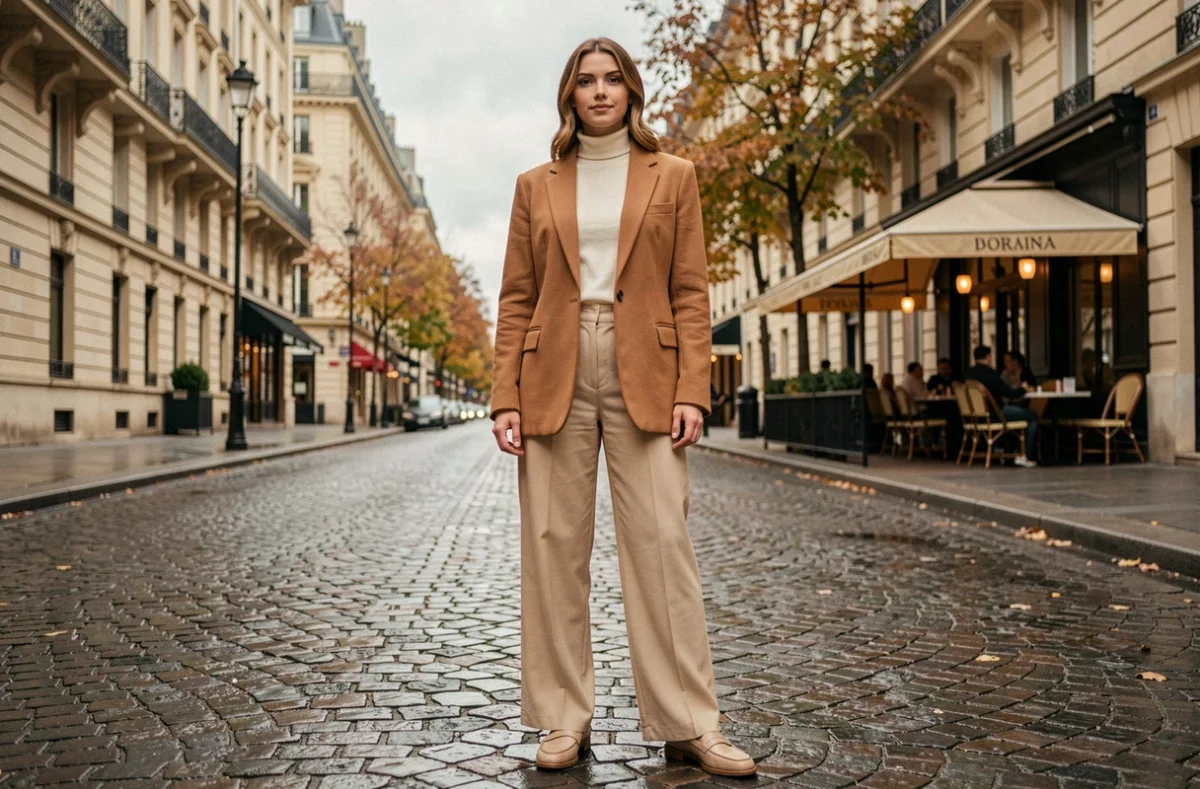
Pants take on the role that jackets or coats occupied in recent seasons. Balloon cuts, flared styles, slits, puffed shapes, cropped lengths: the proposals seen in Paris street style break the dominance of straight or slim jeans. Pants become the piece that defines a silhouette, not the top.
This shift changes the logic of purchasing. Investing in a bold bottom (animal print, graphic, transparent) allows for a neutral top, a basic in black or white, without losing visual impact. We recommend prioritizing a single strong piece per outfit and building the rest around it.
Specifically, a flared graphic print pant worn with a solid top and flat shoes is enough to anchor the style in the season. The mistake would be to multiply signals: statement pants, embellished jackets, heavy accessories. Controlled maximalism relies on a focal point, not on an overall excess. This is also an angle found by following fashion news on Petit Echo de la Mode, where analyses emphasize silhouette coherence rather than accumulation.
Airy Materials and Transparency: Fashion Facing Climate Constraints
Several analyses from Paris Fashion Week directly link transparency, fluid layering, and ventilated constructions to the exceptionally high temperatures observed during the shows. Lightness is no longer just an aesthetic direction. Airy materials respond to a real thermal constraint, not a trend whim.
This point has implications for fabric choices. Sheers, organzas, and open-knit fabrics replace opaque linings. In autumn-winter, this translates to layering: a transparent piece worn over structured underwear or a technical tank top, rather than a thick sweater.
Transparent and Openwork Accessories: An Autonomous Trend
Transparency is not limited to clothing. Perforated or mesh bags have been spotted at Hermès, Maison Margiela, and Chanel. The openwork accessory extends the search for lightness beyond textiles. It’s a strong signal: when historic leather houses adopt perforation, the trend goes beyond mere fashion effect.
- Mesh or perforated bags, worn crossbody or by hand, visually lighten a dark outfit
- Cut-out or thin-strapped shoes, replacing closed models even at the beginning of autumn
- Wire or openwork metal jewelry, preferred over the chunky pieces of the previous season
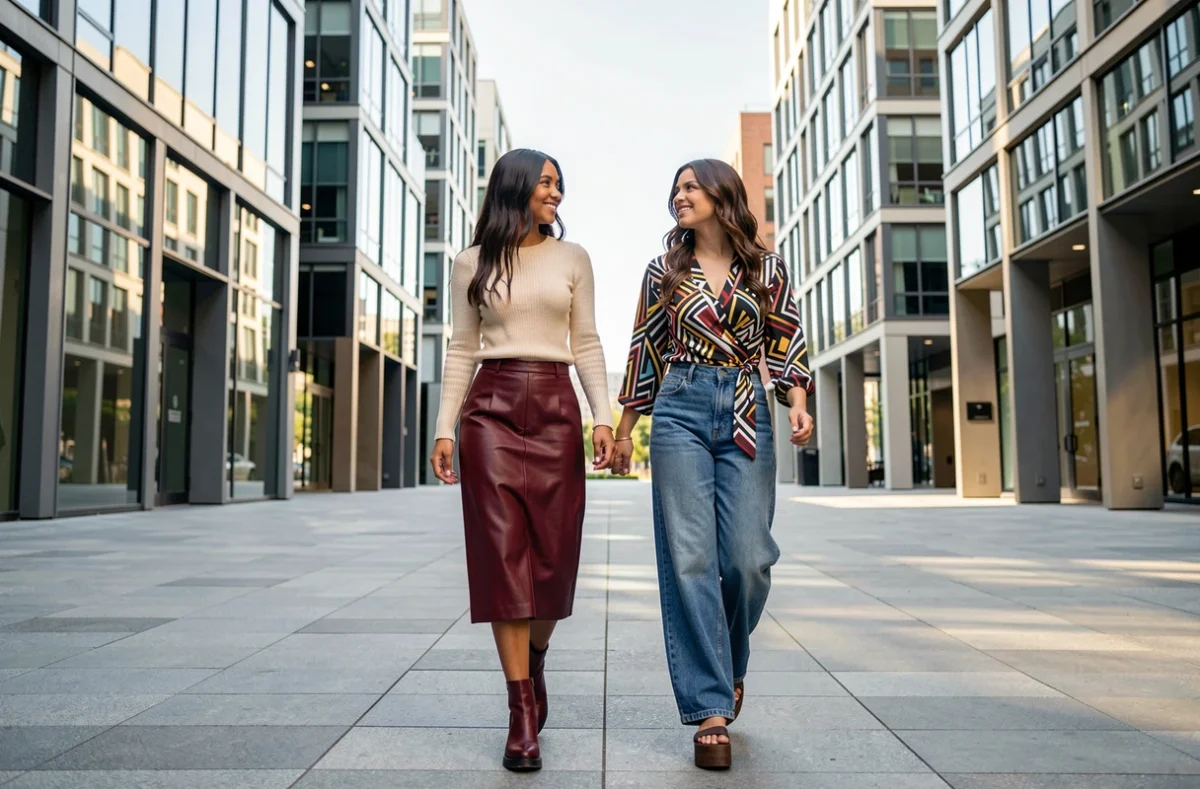
Seasonal Colors: Red, Black, and White as the Foundation of Autumn-Winter Style
Red emerges as the guiding color. Not cherry red or orangey red: a deep, saturated red that works well in a total look or as an accent on a unique piece. Paired with leather, it creates an immediate maximalist effect without the effort of coordination.
Black remains the wardrobe foundation, but its role changes. It serves as a neutral canvas for statement pieces. A well-cut black pant becomes the ideal support for a transparent top or an openwork accessory. White, on the other hand, gains ground on pieces usually reserved for summer: flowing dresses, long coats, open shoes worn with socks.
Combining Colors Without Falling into Costume
The temptation for a total red or white look exists, but it works mainly in editorial contexts. In daily life, we recommend limiting strong color to a maximum of two pieces and breaking it up with an element in black or natural leather.
- Red + black: the most direct combination, suitable from office to evening
- White + leather: an accepted seasonal shift, provided a soft leather is chosen over patent leather
- Red + white: reserved for clean silhouettes; otherwise, the result veers into costume territory
- Total black + openwork accessory: the most discreet version of maximalism, suitable for professional contexts
Leather and Structured Pieces: The Counterpoint to All-Fluid
In the face of the wave of transparency and fluidity, leather plays a grounding role. Leather garments (short jackets, straight skirts, fitted pants) provide the structure that airy materials do not. Leather serves as a counterbalance in a light silhouette, not as a dominant piece.
Finishes matter: matte leather rather than patent, visible seams rather than smooth finishes. The autumn-winter fashion trend values leather that looks worn, not new. Vintage or second-hand pieces in grained leather gain relevance over new models with impeccable finishes.
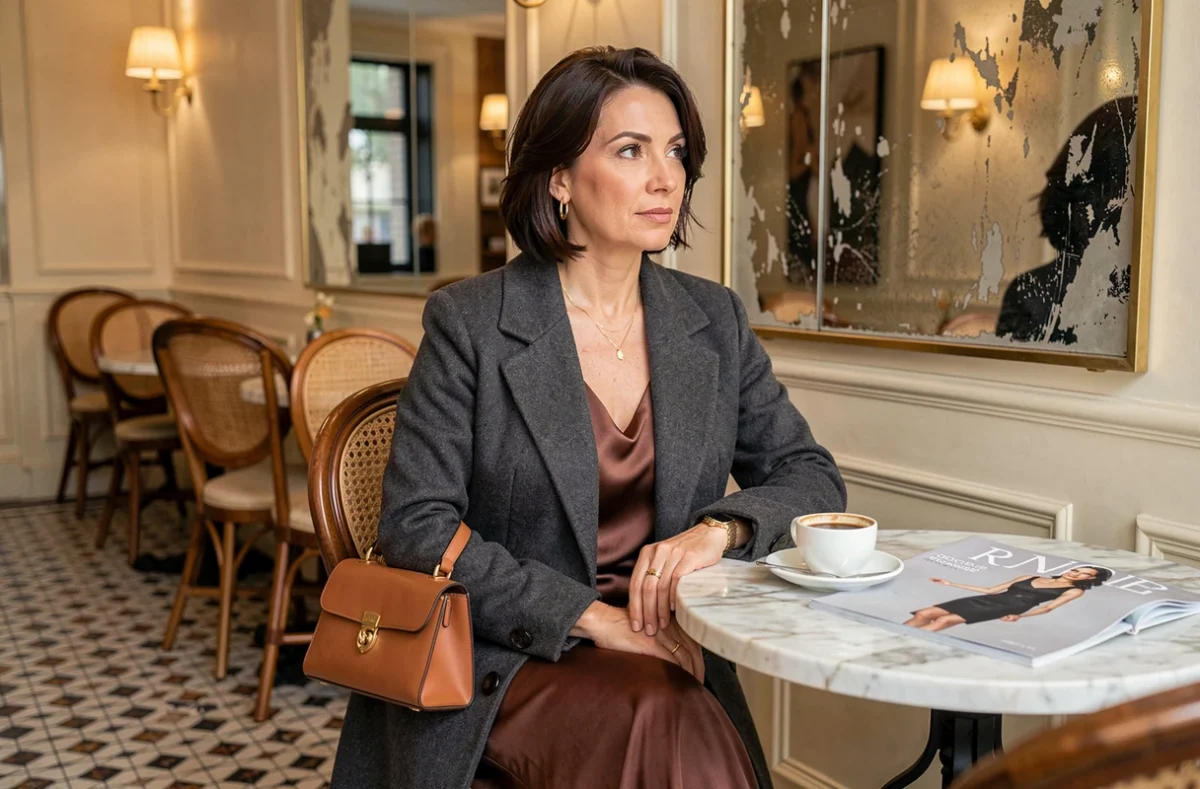
This season’s wardrobe boils down to a clear arbitration: choose a single strong direction per outfit (statement bottoms, transparency, saturated color, or structured leather) and build the rest in a subdued manner. The pieces that will carry through the season are those that function as focal points without requiring a fully coordinated look. A graphic pant, an openwork bag, or a matte leather jacket are enough to anchor a silhouette in the moment, without overdoing it.