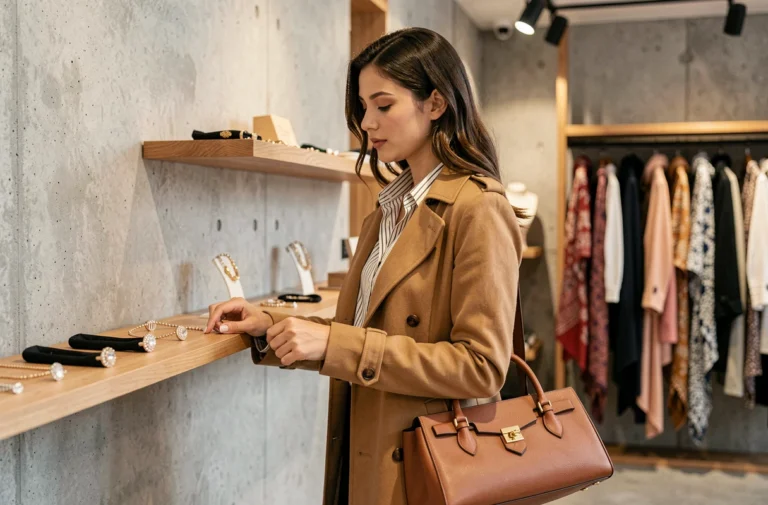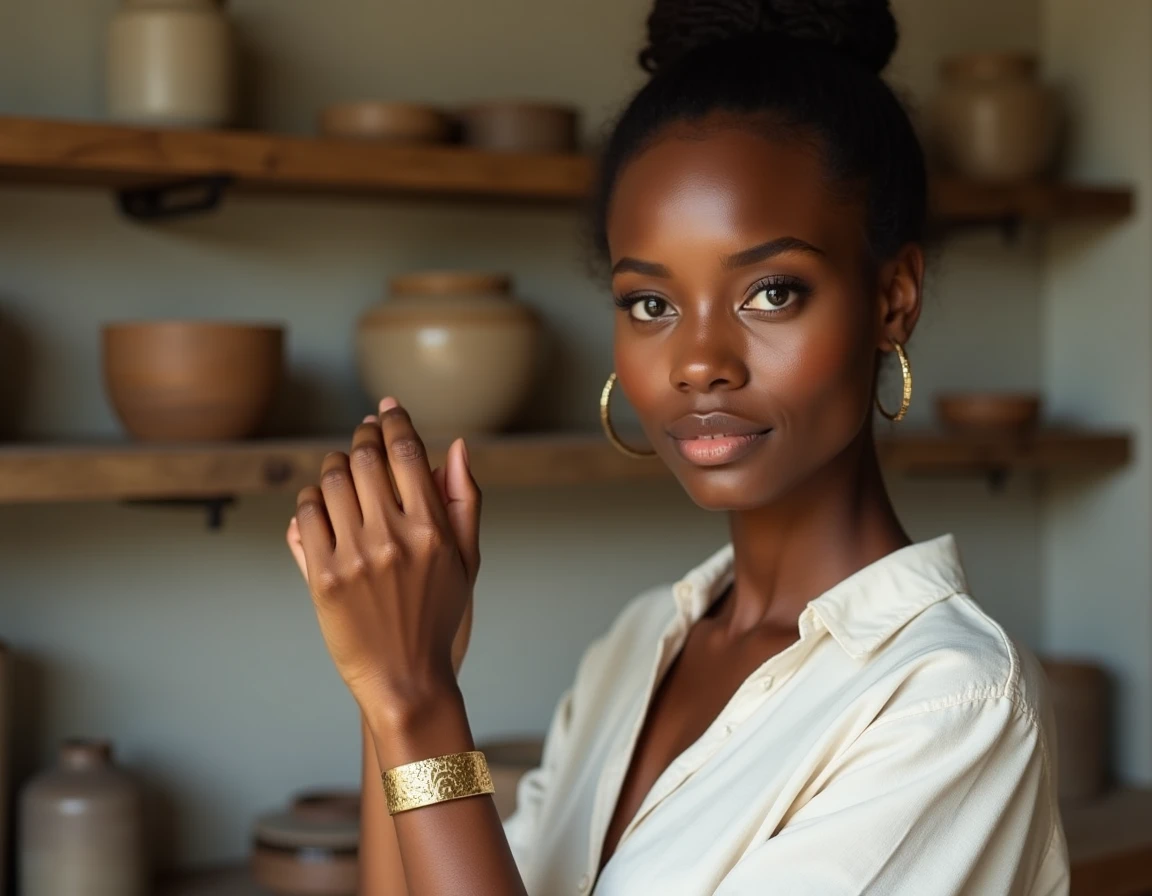
The handmade jewelry market has transformed in recent years. Creators no longer just offer “handmade” pieces relying solely on the argument of authenticity. They incorporate technical materials, modern alloys, and natural stones into designs intended for everyday wear. Handmade jewelry and contemporary style no longer oppose each other; they converge into a segment where the traceability of craftsmanship becomes the true distinguishing criterion.
Recognizing a true handmade jewelry piece among imitations
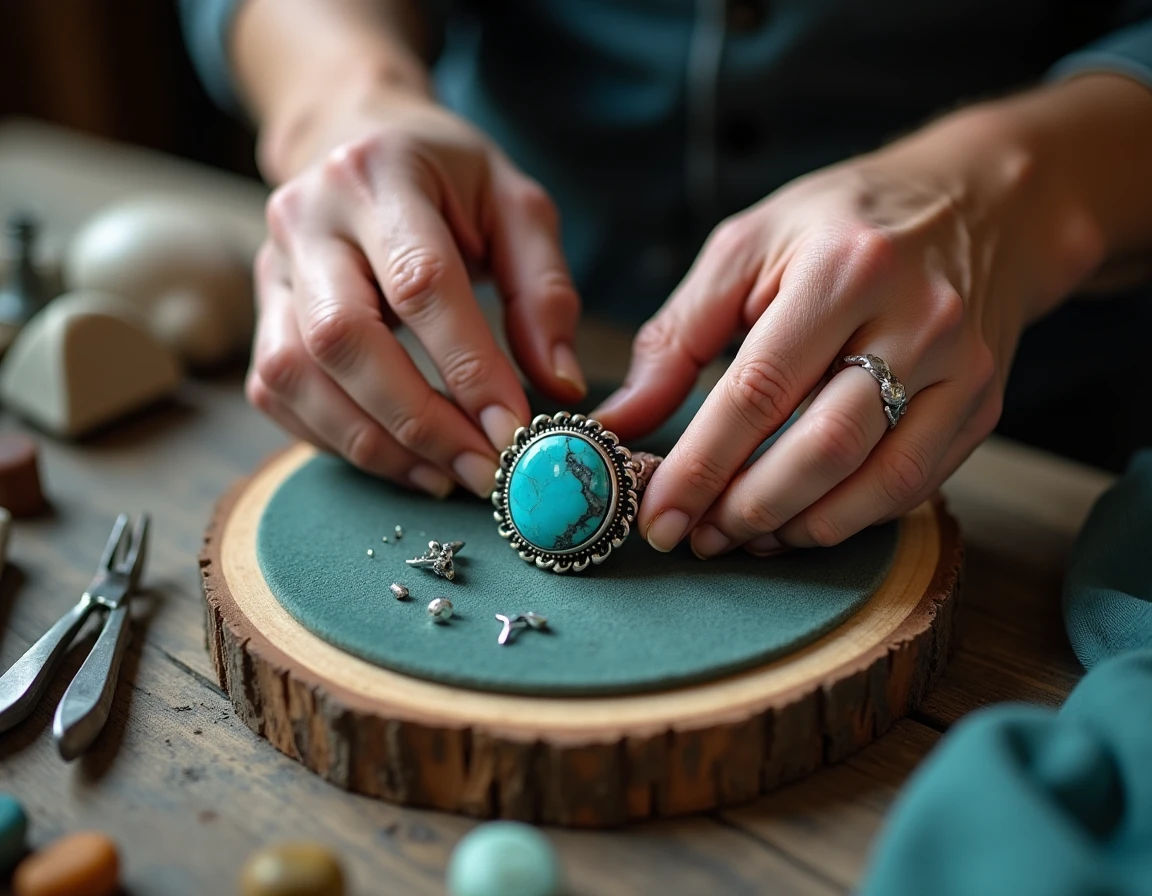
The term “handmade” is not subject to any strict regulatory definition in France. A piece of jewelry assembled from imported industrial components can legally bear this label. Field reports vary on this point: some artisans believe that manual assembly is sufficient, while others require complete manufacturing, from metal casting to stone setting.
Some concrete guidelines help to sort through this. An artisan who truly works their material can describe each step of transformation, from selecting the ingot or raw stone to the finishing. Variations in color, texture, and shape in natural stones are not defects: these irregularities prove that the piece is not mass-produced.
- Ask for the complete manufacturing journey, not just the final assembly location
- Check if the artisan signs or stamps their pieces, which holds them accountable for the quality of the metal
- Observe the finishes on the back of the jewelry: a uniform polish on all sides is typical of mechanical production, while manual work leaves slight tool marks
- Favor creators who precisely name their stones and alloys (925 sterling silver, stainless steel, gold-plated) rather than vague terms like “gold metal”
Some female creators today offer collections where each piece is documented, detailing the materials and process. You can explore this type of approach at https://www.byjulie.fr/, where handmade creations are associated with a coherent visual universe.
Natural stones and modern alloys: the mix that defines current handmade jewelry

The combination of natural stones and contemporary metals is the most visible trend in the handmade segment. Stainless steel and 925 sterling silver are gradually replacing costume metals in the collections of independent creators. The reason is practical: these materials resist oxidation, withstand contact with water, and maintain their shine without daily maintenance.
Natural stones provide visual uniqueness. Each agate, each turquoise, each quartz has shades specific to its source deposit. This natural variability produces pieces where no two are strictly identical, even within the same collection.
The design work has evolved in parallel. Contemporary creators no longer limit themselves to the ethnic or bohemian shapes long associated with handmade jewelry. Clean lines, sharp geometries, and minimalist settings dominate. A modern handmade piece can be worn equally well with a suit or jeans, significantly broadening the target audience.
Custom personalization: from dialogue to the final piece
Personalization represents the strongest distinguishing argument of handmade jewelry against industrial production. Artisan houses increasingly highlight a process that begins with an exchange with the client, sometimes around a stone chosen together, even before the first file stroke.
Artisanal custom work starts from a personal intention transformed into an object. A client wishing to integrate an inherited stone into a modern design, or one wanting a ring to match an existing earring, finds in the artisan a flexibility that standardized brands cannot offer.
This process comes at a cost. The design time, exchanges, and successive adjustments are reflected in the final price. However, the resulting piece exists nowhere else. For jewelry meant to mark a moment (engagements, births, anniversaries), this exclusivity often justifies the investment.
Handmade jewelry for women: adapting choices to personal style
A common pitfall is accumulating handmade pieces that lack coherence with one’s wardrobe. A bold necklace made of raw stones loses its impact when worn with a busy print. Conversely, natural stone earrings with a monochrome outfit create an effective focal point.
Some principles work reliably:
- Voluminous pieces (statement necklaces, wide cuffs) pair well with simple necklines and solid colors
- Fine jewelry in silver or stainless steel layers easily (stacking bracelets, rings) without overwhelming the silhouette
- Warm-toned stones (carnelian, amber, tiger’s eye) match autumn palettes, while cool tones (labradorite, aquamarine) harmonize with blues and grays
Handmade jewelry functions as a statement piece in an outfit, not as a filler accessory. It’s better to wear a single creation with intention than to accumulate pieces without logic.
The handmade jewelry segment is gaining clarity as creators document their methods and materials. The quality of a piece is verified in the details of craftsmanship, in the precise choice of alloys and stones, and in the artisan’s ability to adapt their work to individual requests. It is this combination of transparency and expertise that sustainably separates handmade creation from mass jewelry.