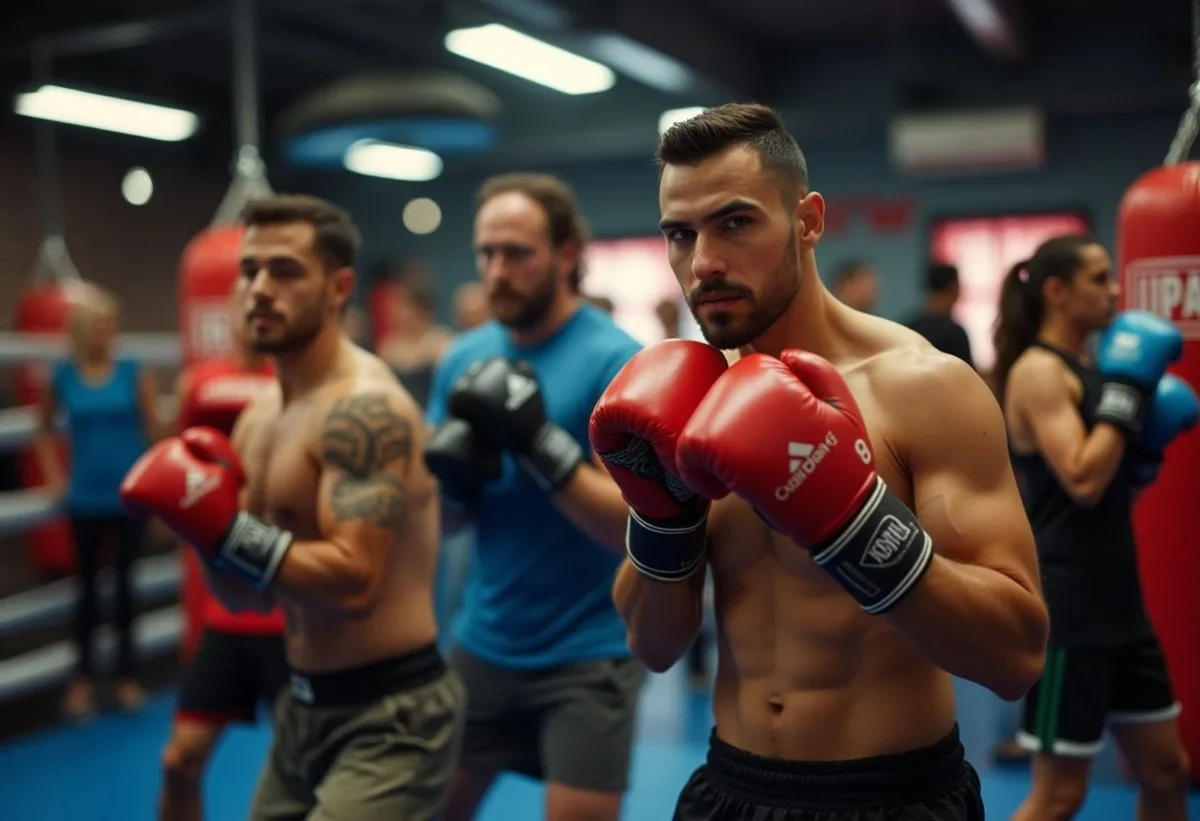
A combat sport that combines strength, strategy, and agility. Kickboxing, a discipline that captivates with its diversity and multiple origins, is much more than a simple confrontation between two opponents. Practitioners of this boxing combine punching and kicking techniques to create a complex and demanding martial dance. With influences from various corners of the world, it finds its place in the hearts of combat sports enthusiasts. Misconstrued as a chaotic mix of strikes, this sport presents a harmonious set of rules and styles, where every movement is calculated and every decision is based on thoughtful strategy.
The different disciplines of kickboxing
Kickboxing encompasses various disciplines, each with its own specific rules and techniques. These disciplines, often derived from ancient traditions, offer a variety of styles to explore.
The most well-known is undoubtedly Muay Thai, also known as Thai boxing, which stands out for its use of elbows and knees, in addition to fists and feet. Originating from Thailand, this sport is often referred to as the art of eight limbs and requires perfect physical condition.
Another popular style is Kickboxing, which comes in several variants depending on the regions, with rules sometimes influenced by English boxing.
In France, Savate or French boxing, is distinguished by its elegance and its emphasis on technique and precision in kicking.
Finally, K-1, a more modern discipline, draws inspiration from several kickboxing styles and is often used in international competitions.
History and evolution of kickboxing
Kickboxing has its roots in ancient martial traditions. Its development has been marked by the influence of several cultures and the evolution of rules over the centuries.
- Antiquity: The earliest traces of fights including punches and kicks date back to ancient Greece, where disciplines like Pankration were practiced.
- Middle Ages and Renaissance: Europe saw the emergence of more structured forms of combat, influenced by Asian martial arts.
- 19th and 20th centuries: With the rise of cultural exchanges, kickboxing became international, giving birth to competitions and tournaments on all continents.
- Contemporary era: Today, the discipline is a recognized sport, with federations governing competitions and ensuring the safety of practitioners.
The benefits of kickboxing
Practicing kickboxing brings numerous advantages on both physical and mental levels. It is much more than just a sporting activity; it is a lifestyle that positively influences its followers.
First, regular practice improves overall physical condition. It helps develop strength, endurance, flexibility, and coordination. Each session involves intensive training that engages all the muscles of the body, making it an excellent way to stay fit.
Moreover, it strengthens self-confidence and personal discipline. By engaging in this art, one learns to manage stress, set goals, and persevere despite obstacles.
Finally, within a boxing club in Paris, one develops a spirit of camaraderie and mutual respect, essential values in everyday life.
Kickboxing around the world today
Today, kickboxing is a globally recognized discipline. It is practiced in many countries, with competitions regularly organized to bring together the best athletes.
Asian countries, particularly Thailand, Japan, and China, are the largest contributors to the popularization of this discipline.
In Europe, France and the Netherlands stand out for the quality of their fighters and the richness of their training schools.
In America, kickboxing is rapidly developing thanks to the enthusiasm for mixed martial arts (MMA) and the opening of numerous clubs that teach these techniques.
The rise in popularity of this discipline is also favored by its presence in the media, with regular broadcasts of fights on international channels and online platforms.