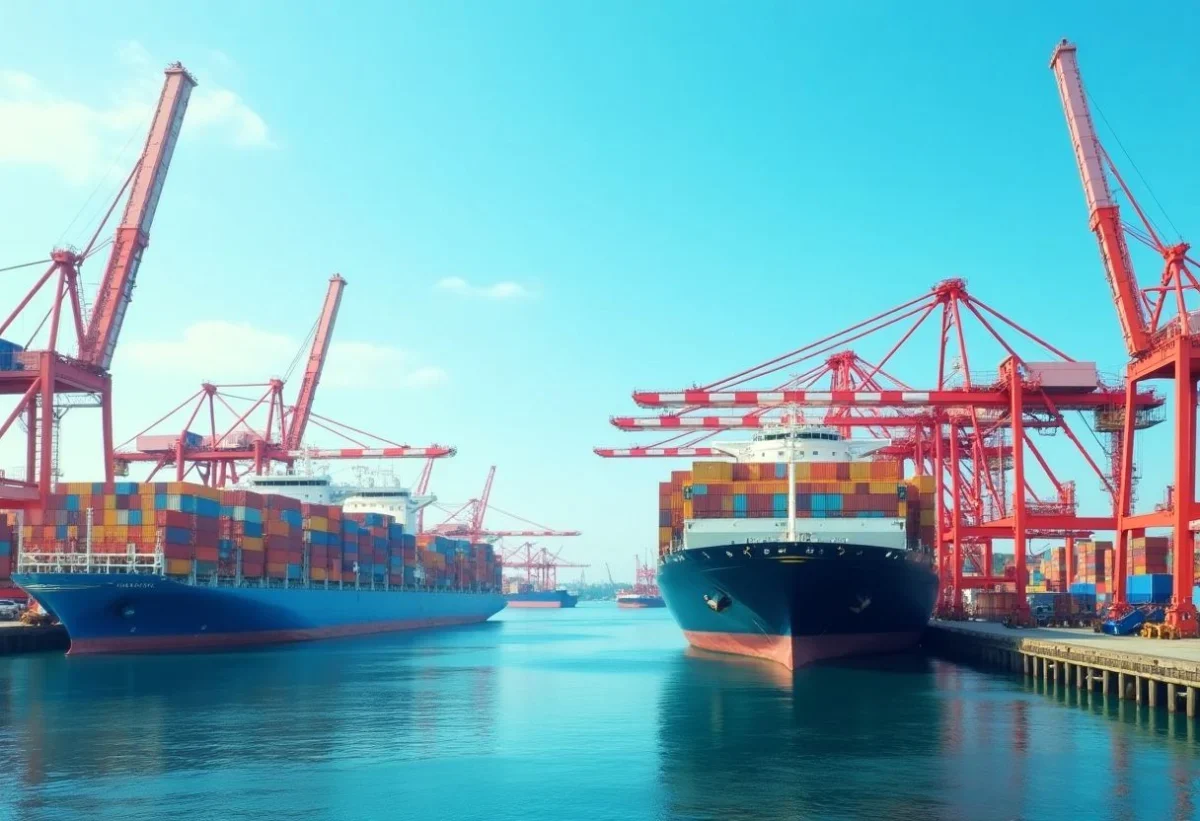
International transport has transformed our way of living, working, and exchanging. It connects continents, cultures, and economies, creating a vast network of connections that defines our modern world. Ships loading containers in bustling ports, planes crossing thousands of kilometers in just a few hours, and railways traversing the land all testify to humanity’s incredible ability to overcome distances. Far from being merely a mechanism for moving goods, international transport is the beating heart of the global economy, a key element that influences policies, innovation, and sustainable development.
Global logistics: a coordinating ballet
In the shadow of large movements of goods, global logistics orchestrates a precise and complex ballet.
- Flow management: Every minute, thousands of packages and shipments cross borders. Managing logistics flows requires meticulous coordination to ensure that each shipment arrives at its destination on time and intact. Companies are investing heavily in inventory management and tracking technologies to optimize these processes.
- Strategic partnerships: Alliances between carriers, suppliers, and distributors are essential. They ensure efficient routes and share resources. These partnerships reduce costs and increase responsiveness to unforeseen events.
- Supply chain challenges: Climate disruptions, geopolitical conflicts, and health crises, such as the COVID-19 pandemic, have highlighted the vulnerability of global supply chains. Companies are seeking to diversify their sources of supply and strengthen their resilience.
Technology and innovation: towards a connected future
Technological advancements are redefining international transport, opening new perspectives and continuously improving performance.
Integrated management systems allow for real-time tracking of shipments, optimizing planning and reducing delays. Autonomous vehicles, although still in development, promise to revolutionize the transport sector. They offer increased efficiency and a potential reduction in human errors.
Moreover, the use of drones for rapid deliveries in remote areas is gaining popularity, demonstrating the impact of innovation on our ability to overcome geographical constraints. International transport is also adapting to environmental requirements, with initiatives aimed at reducing carbon footprints, such as developing alternative fuels and green propulsion technologies.
Environmental impact: a planetary challenge
The international transport sector, while essential, is also responsible for a significant share of greenhouse gas emissions. It must therefore adapt and innovate to reduce its ecological impact.
- Emission reduction strategies: Companies are adopting measures to decrease their carbon footprint, such as optimizing routes, improving the energy efficiency of vehicles, and transitioning to cleaner fuels.
- Environmental regulations and policies: Governments around the world are imposing stricter new regulations to encourage more sustainable transport practices. These policies incentivize industry players to invest in innovative and environmentally friendly technologies.
- Circular economy: An increasingly popular approach is to integrate the principles of the circular economy into international transport. This includes reusing materials, reducing waste, and recycling resources.