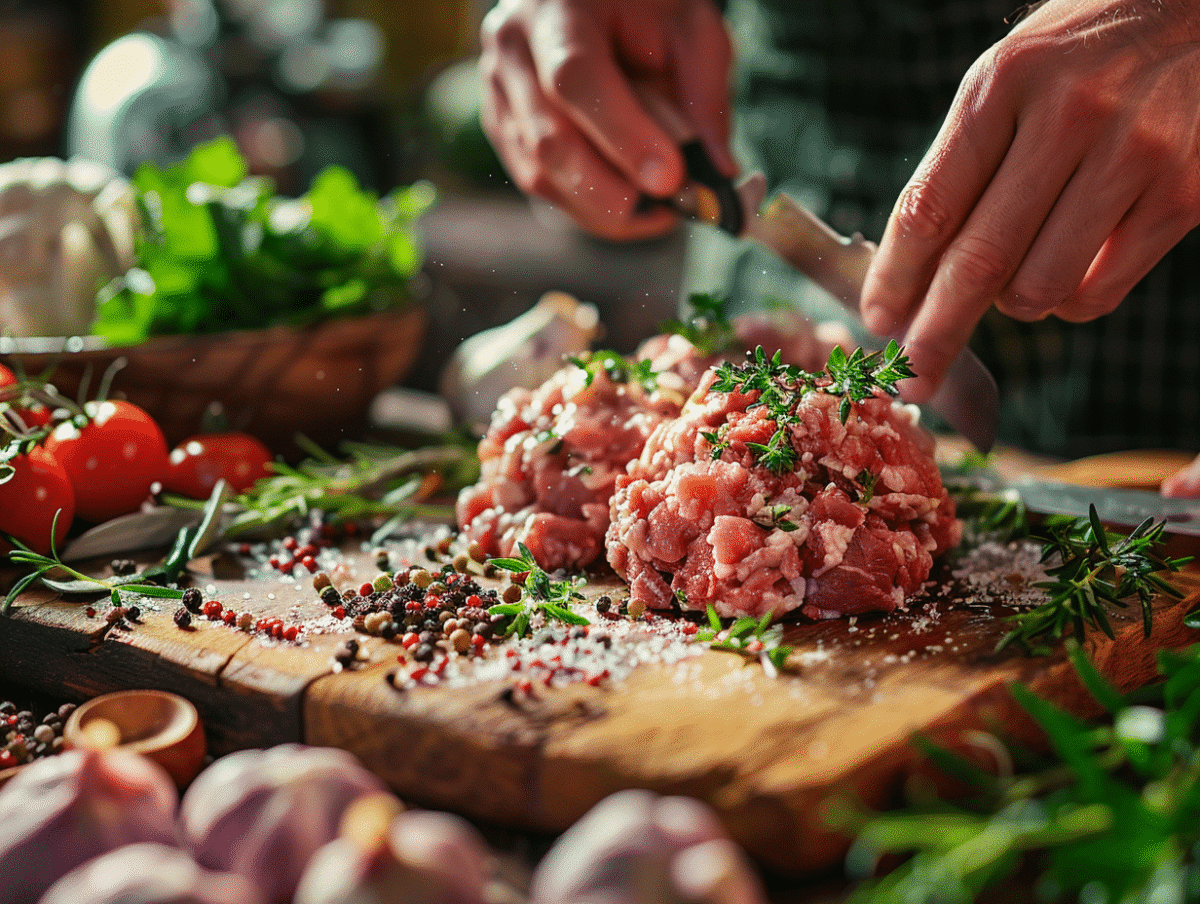
The art of making traditional sausages has been passed down through the ages, embodying the culinary heritage of many cultures. At the heart of these age-old techniques, the choice of meats, the balance of spices, and the skill in grinding and stuffing the casings are crucial. Charcuterie artisans possess valuable tips, often jealously guarded, that contribute to the fame of their creations. Mastering sausage preparation is a craft that requires patience and precision, where each step, from selecting ingredients to cooking, plays a fundamental role in the texture and taste of the finished product.
The Fundamental Steps in Preparing Traditional Sausages
A meticulous preparation is essential when it comes to making traditional sausages, where each component must harmonize precisely. First, the quality of the meats is considered. Pork, the cornerstone of the rind sausage, requires a balance between fat and lean meat, suggesting juicy and flavorful flesh. The rind, for its part, must be fresh and meaty, ensuring texture and structure for the sausage. It is within traditional French cuisine, particularly in the Southwest, that this recipe finds its roots and convivial character.
The herbs and spices introduce another fundamental dimension to the preparation. Garlic, parsley, shallots, chives, or Espelette pepper intertwine to give the sausages authentic and robust flavors, while salt, pepper, quatre-épices, or bouquet garni complete the flavor profile. These carefully chosen ingredients guarantee a charcuterie with balanced and refined notes. They bind with the selected meats to create a gustatory alchemy, a promise of delights for the palate.
The cooking of the sausages is also an essential process. Methods vary according to traditions: some sausages are pan-fried, while others are simmered. The cooking of Frankfurt sausages, for example, follows specific rules to preserve its characteristic texture and taste. For the rind sausage, cooking must be done carefully to achieve the perfect consistency and flavor. Whether browned in a pan or slowly simmered, the sausage reveals its aromas and texture only under precise attention and temperature.
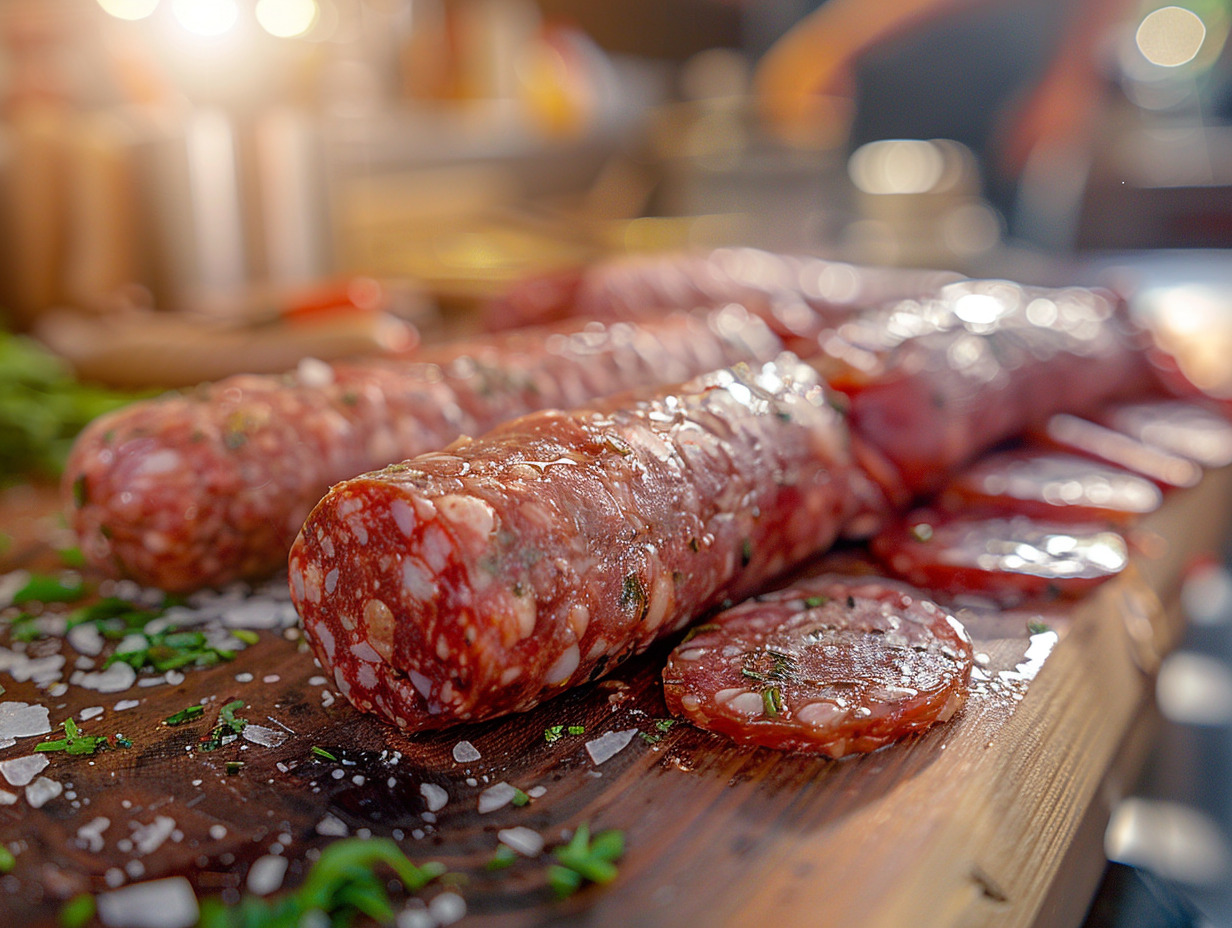
Master Charcutiers’ Tips for Perfect Sausages
The making of the rind sausage revolves around traditional know-how, passed down from generation to generation by master charcutiers. One key tip lies in the choice of meats: they must undoubtedly be of superior quality. Pork, in particular, should exhibit an exquisite balance between fat and lean, so that the sausage stands out for its juiciness and ideal texture.
The herbs and spices play a predominant role in the flavor signature of the sausage. Master charcutiers recommend using natural ingredients: garlic, parsley, shallots, chives, and even Espelette pepper are chosen with discernment for their freshness and ability to release powerful and authentic flavors. Condiments such as salt, pepper, quatre-épices, or bouquet garni must be measured with almost surgical precision to achieve the perfect balance.
In terms of cooking, mastering the heat is essential. Whether the sausage is pan-fried or simmered, temperature control irrevocably influences the final quality of the product. Master charcutiers emphasize slow and attentive cooking, allowing the sausage to cook evenly without losing its tenderness. This patience in the cooking process ensures a rind sausage with a perfectly golden skin and deliciously melting flesh.
As for the side dishes, they are chosen to complement and enhance the dish. Spelt, lentils, beans, flageolets: these vegetables pair brilliantly with the richness of the rind sausage. Master charcutiers favor seasonal products, prepared simply to let the flavors of the terroir shine through. A well-chosen and well-executed accompaniment is the final touch that transforms the meal into an unforgettable culinary experience.