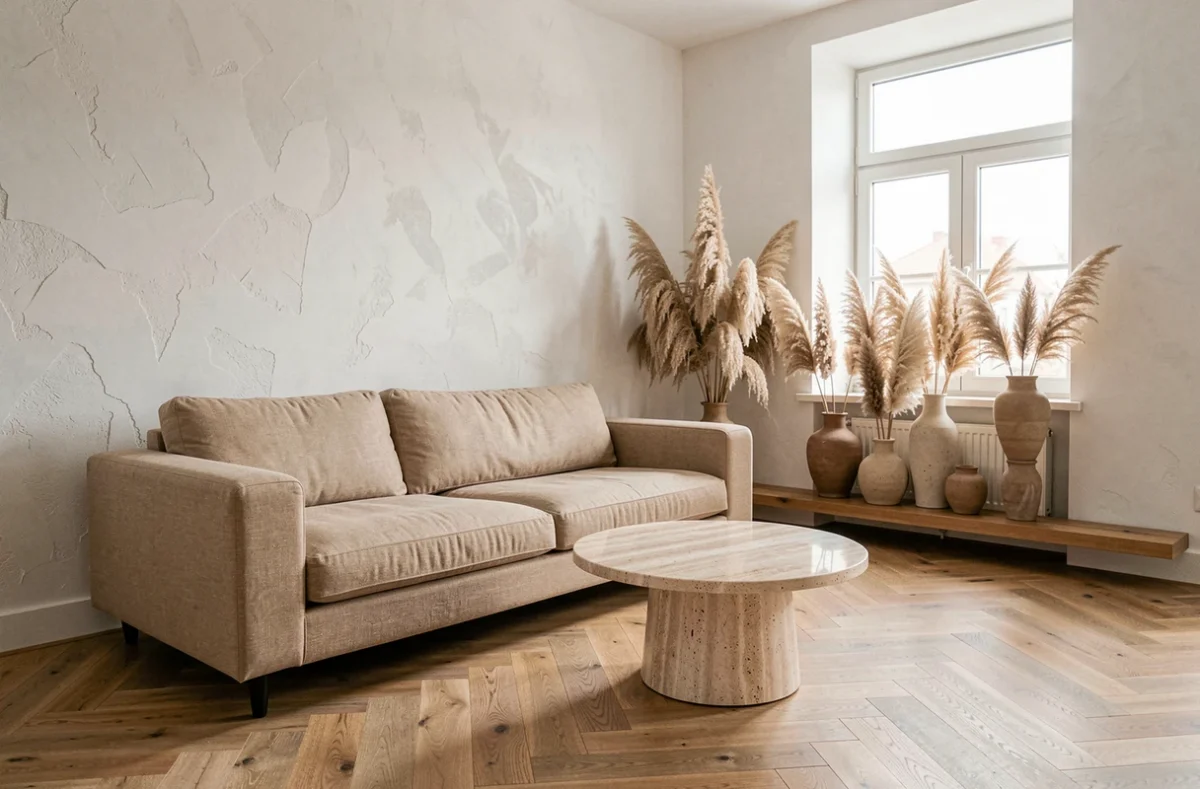
Arranging and decorating a home is not just about choosing a sofa or a paint color. Every design decision involves a set of constraints: the available volume, natural light, the function of each room, and sometimes regulatory obligations related to the energy performance of the housing. Understanding these parameters before browsing catalogs helps avoid costly choices that need to be corrected.
Energy renovation and decoration: the link that decor inspirations overlook
An interior decoration project often starts with aesthetic desires. But for landlords, the energy performance diagnosis now dictates the priority works. Since January 1, 2025, homes classified as G can no longer be subject to new rental leases.
Homes classified as F will be affected starting January 1, 2028, and those classified as E from January 1, 2034, according to the schedule reminded by ANIL. Practically, this means that before rethinking the layout of a living room or renovating a kitchen, one must check whether insulation, heating, or joinery needs to be addressed beforehand.
This is not an administrative detail. Applying a decorative coating to a poorly insulated wall could potentially require everything to be redone during interior insulation work. In a co-ownership, decisions about common areas and energy works can also impact individual layout projects. Thinking about sustainable decoration starts with checking the condition of the building.
Many resources dedicated to decor inspiration overlook this aspect. By browsing the houses on Tip Top du Web, one finds approaches that intersect aesthetics and technical constraints, which helps structure a realistic project.
Colour drenching and lime paint: two wall decoration techniques to understand
Current decor trends go beyond just an accent wall. Two techniques deserve attention because they radically change the perception of a space.
Colour drenching applied to the living room or bedroom
Colour drenching involves painting the walls, ceiling, woodwork, and sometimes furniture in the same color or very close shades. The desired effect is a total immersion in a hue, which eliminates visual breaks and enlarges the perception of space.
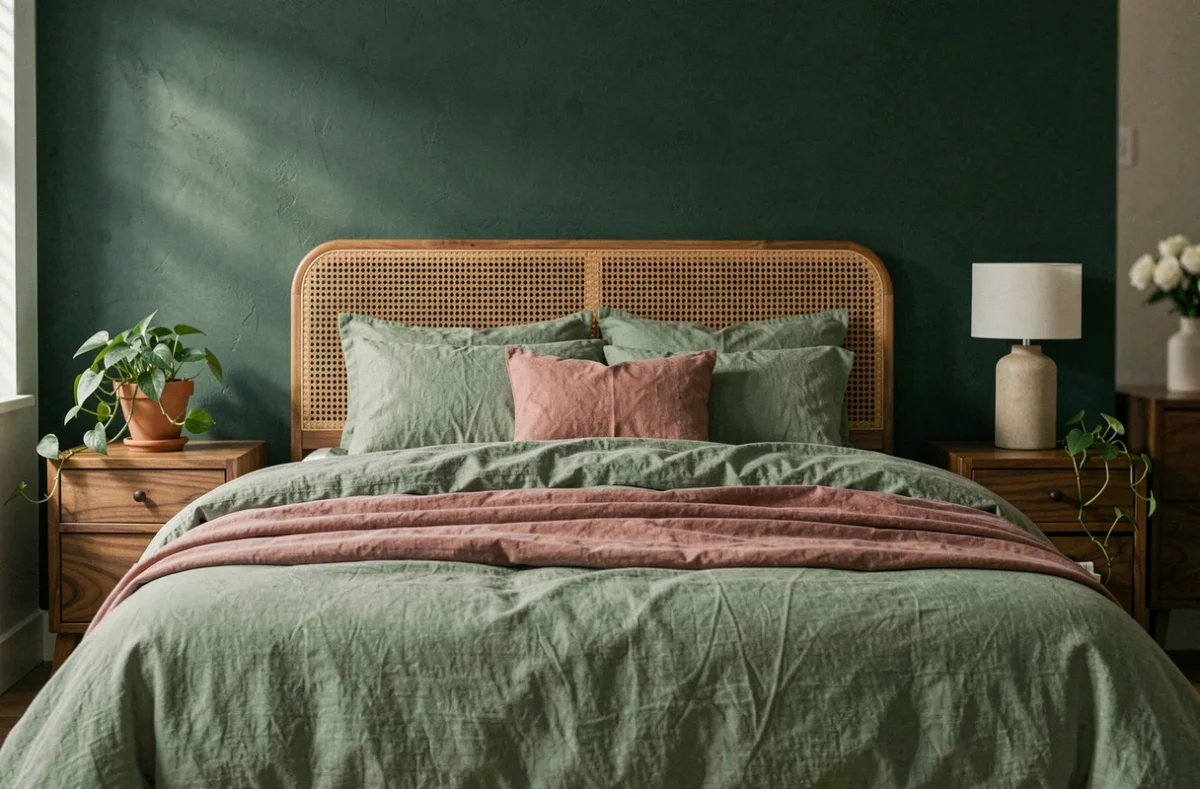
This technique works particularly well in small rooms or attics, where angles and nooks disrupt the reading of volume. A narrow living room treated with colour drenching in a deep sage green will appear more cohesive than with an isolated accent wall.
Lime paint for interiors seeking texture
Lime paint brings a living texture to walls. Unlike smooth acrylic paints, it creates subtle variations in depth and brightness depending on the angle of light. It suits Mediterranean styles, modernized rustic interiors, as well as contemporary spaces that seek to break the coldness of uniform surfaces.
Its application requires some technique (it is worked in crossed layers), but the result is difficult to replicate with other finishes. It is a wall decoration choice that ages well, provided the substrate is properly prepared.
Interior layout by room: balancing style and function
Rather than listing ideas room by room, let’s focus on the trade-offs that frequently arise and determine the success of a layout.
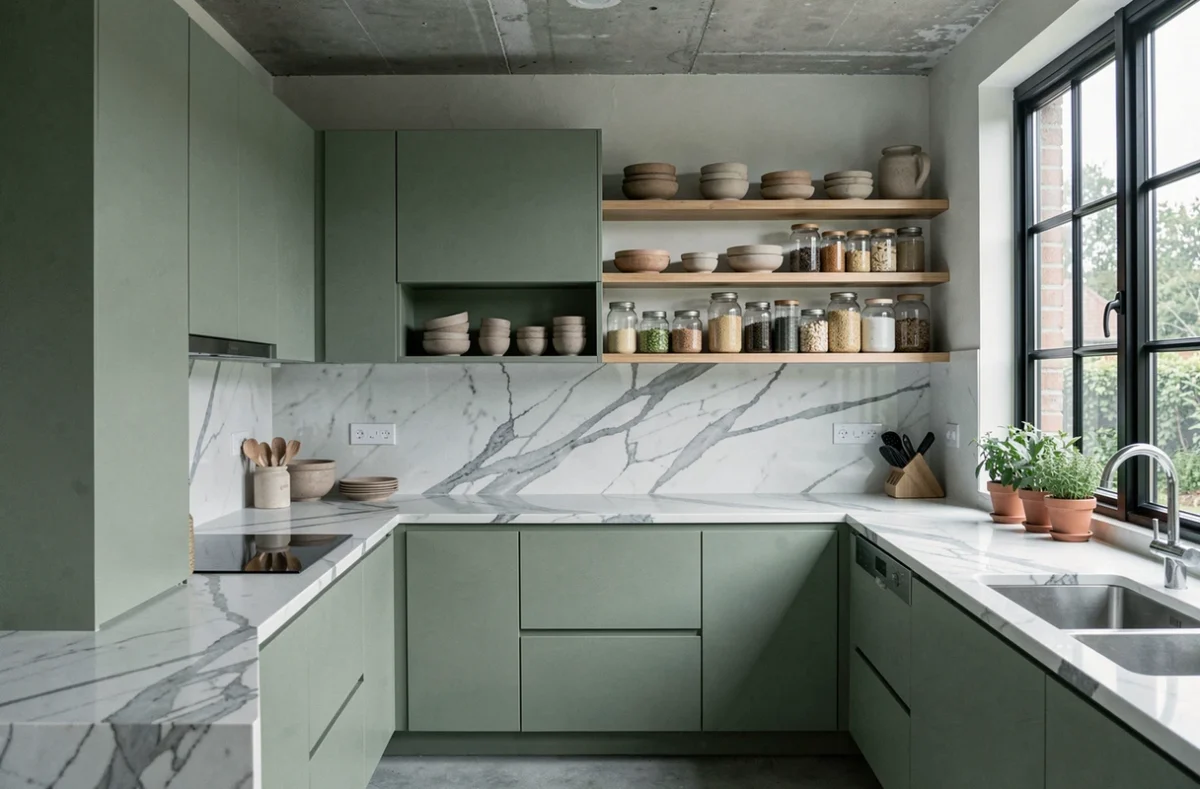
- In the kitchen, the choice between a solid wood countertop and a laminate surface is not just a budget matter. Wood requires regular maintenance (oil, light sanding) but brings a warmth that laminate does not replicate. The compromise often lies in a treated waterproof wood, less visually noble but more durable.
- In the bedroom, textiles determine the ambiance more than wall color. Crumpled linen bedding transforms a neutral room into a warm space. Investing in bedding before painting is often more cost-effective in terms of visual impact.
- For the living room, the arrangement of furniture matters more than its style. A sofa pushed against a wall in an open living space creates an unwelcoming central void. Shifting it, even by a few dozen centimeters, is enough to create a conversation area and structure the space.
- In the bathroom, dark colors work better than one might think, provided there is suitable lighting. Dark tiles with warm side lighting create a cocooning effect that clinical white does not produce.
Building an effective decor moodboard: method and common mistakes
A moodboard (inspiration board) is only useful if it goes beyond a collection of images. Most Pinterest boards remain accumulations of contradictory atmospheres, mixing Scandinavian minimalism, bohemian maximalism, and industrial design without a guiding thread.
For a moodboard to genuinely serve a decoration project, it must meet three constraints:
- Limit the palette to a maximum of three dominant colors, including neutral tones. Beyond that, the result will be incoherent once transposed into the actual room.
- Include at least one material sample (wood, fabric, metal) and not just photos. A photo of light oak flooring says nothing about its actual hue under artificial lighting.
- Integrate the dimensions of the room. A decor inspiration disconnected from real volumes leads to inappropriate purchases. A large armchair spotted in a loft photo may not fit in a Parisian two-room apartment.
This discipline transforms a creative exercise into a decision-making tool. It avoids back-and-forth trips to the store and returns of online orders.
Design trends and natural materials: what lasts beyond a season
Decor trends change quickly. What distinguishes a sustainable choice from a passing fad is the ability of the material or style to function in varied contexts. Raw wood, linen, natural stone, and terracotta transcend decades because they adapt well to both contemporary interiors and more traditional spaces.
In contrast, very marked finishes (glossy lacquer, saturated geometric patterns, neon tones) go out of style in just a few seasons. Betting on neutral and durable bases allows for renewing the ambiance through accessories: cushions, lighting, decorative objects. The overall cost is lower, and adaptability is much higher.
A successful layout project relies less on the latest trend spotted online than on the coherence between the existing structure, the chosen materials, and the daily use of each room. It is this articulation between technique and aesthetics that makes the difference between a decorated house and a well-thought-out home.