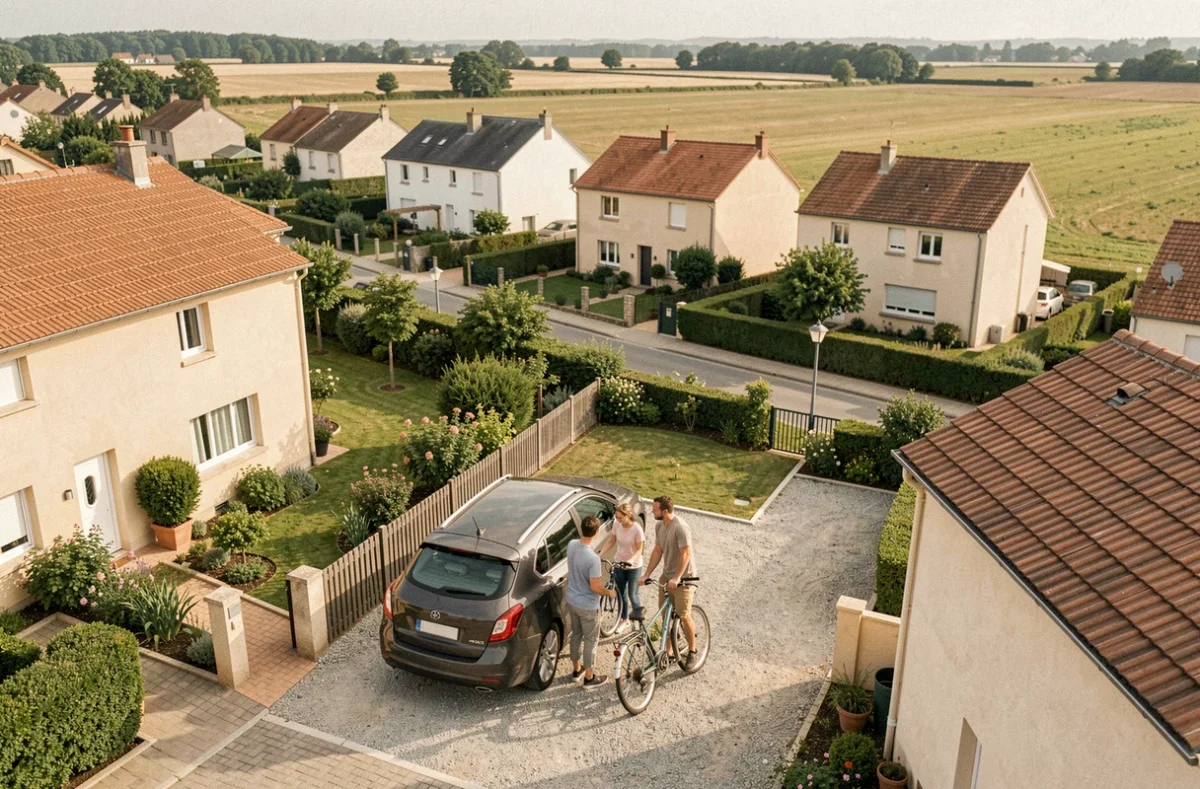
The Insee’s zoning system for functional urban areas, adopted in 2020, reshuffled the map. The former urban-area classification suggested a clear boundary between suburbs and the surrounding countryside. The new framework classifies municipalities according to how strongly they are linked to an employment hub, making the distinction between peri-urban and suburban areas more practical, but also more technical.
Insee zoning and functional urban areas: what common definitions leave out
The term “suburban” does not appear in any French statistical zoning system. Borrowed from English-language geography, it refers to residential suburbs in continuous built-up areas connected to the urban agglomeration. Peri-urban areas, by contrast, are defined by a break in the built-up landscape: municipalities drawn to the employment hub but separated from the agglomeration by open, agricultural or forested land.
This distinction is based on the morphology of the built environment, not on distance from the center. A municipality twelve kilometers from a city center may be suburban if its built-up area is continuous. Another, eight kilometers away, may be peri-urban if fields separate it from the urban area.
We find that confusion between the two terms often stems from reading land-use categories too quickly. To understand the difference between peri-urban and suburban areas, at least two criteria need to be considered together: the physical continuity of the built environment and the share of commuters traveling to the employment hub.
Commuting: the criterion that truly distinguishes peri-urban from suburban areas
Commuting patterns are the most reliable indicator for distinguishing between these two areas. In suburban areas, public transport (metro, tram and high-frequency buses) remains extensive. Residents have alternatives to driving.
Peri-urban areas remain structurally dependent on cars. Insee has documented an increase in the median commute for rural residents over the past twenty years. This trend directly affects peri-urban belts, where access to jobs depends on long journeys into the urban agglomeration.
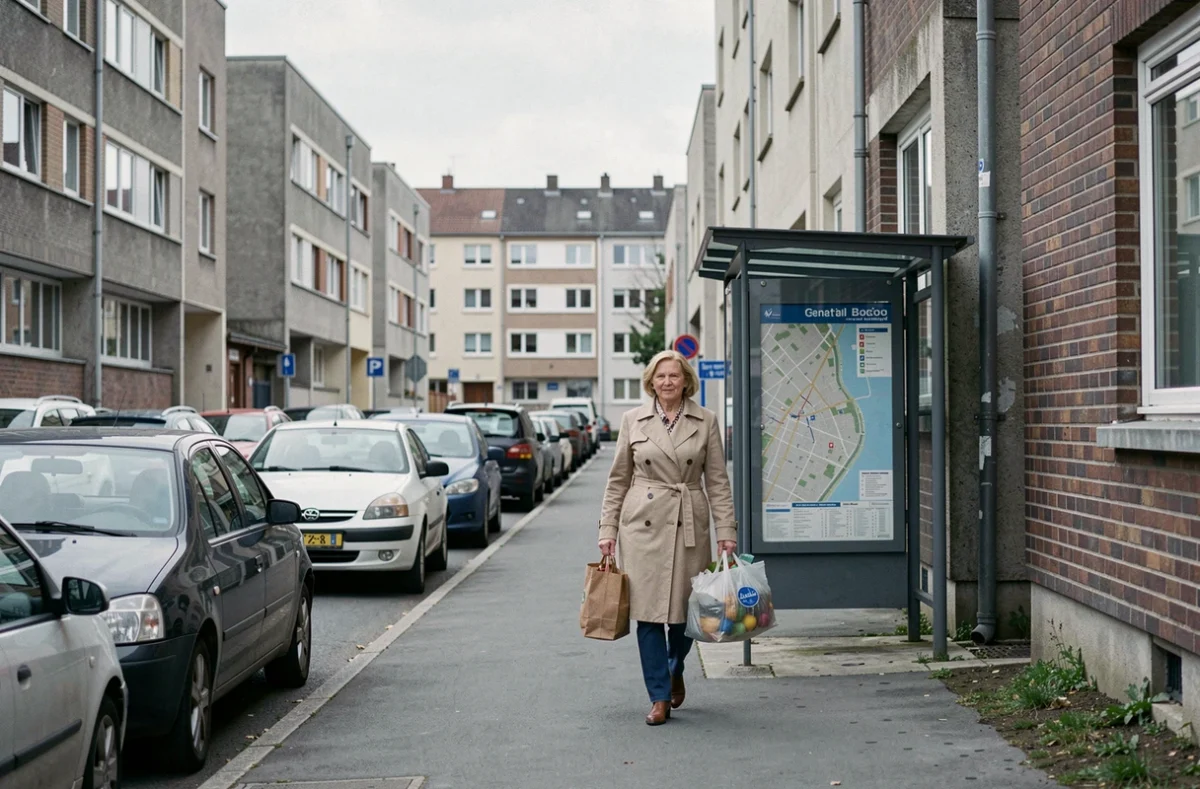
An Insee publication on commuting explicitly highlights the issue: peri-urbanization poses a challenge to sustainable transport. Low population density makes public transport routes less profitable, locking households into a carbon-intensive mobility model.
In suburban areas, density is sufficient to justify investment in major infrastructure. The marginal cost per passenger falls as density increases, which explains why tram lines often stop at the edge of peri-urban areas.
Land-use constraints and the Climate and Resilience Law: the future of the peri-urban housing estate model
The Climate and Resilience Law established binding rules for both types of area, but its effects are concentrated in peri-urban zones. The goal of net zero land take by 2050, with an interim target to reduce the consumption of natural, agricultural and forest land between 2021 and 2031, directly targets the spread of low-density housing estates.
Suburban areas, already denser, have different options: redeveloping brownfield sites, adding extra floors and subdividing plots. Peri-urban areas, meanwhile, face a paradox: municipalities that built their appeal on available land and low prices per square meter are gradually losing that advantage.
The effects on the property market vary by area:
- In suburban areas, the scarcity of building land pushes prices up but encourages densification and renovation of the existing housing stock.
- In peri-urban areas, restrictions on land take slow new developments without reducing demand, putting pressure on existing properties.
- Peri-urban municipalities that have not anticipated revisions to their local urban plans risk a freeze on building permits in the medium term.
Peri-urban and suburban lifestyles: beyond the city-versus-country cliché
Reducing peri-urban areas to detached houses with gardens and suburban areas to apartment blocks would be a mistake. Peri-urban areas also include small apartment buildings and mid-density housing, particularly in the central towns that anchor these belts.
Social life differs more because of the layout of public spaces than the type of housing. In suburban areas, nearby shops, services and cultural facilities make everyday interactions with neighbors easier. In peri-urban areas, social life revolves around hubs: the school, the village bakery and the intermunicipal sports complex.
Access to public services is another practical point of difference:
- Suburban areas generally have adequate medical coverage and several schools nearby.
- Peri-urban belts face concentrated problems with medical-service shortages and facility closures, despite a growing population.
- Travel times to public services (the prefecture, courthouse and hospital) increase significantly once you leave the continuous urban area.
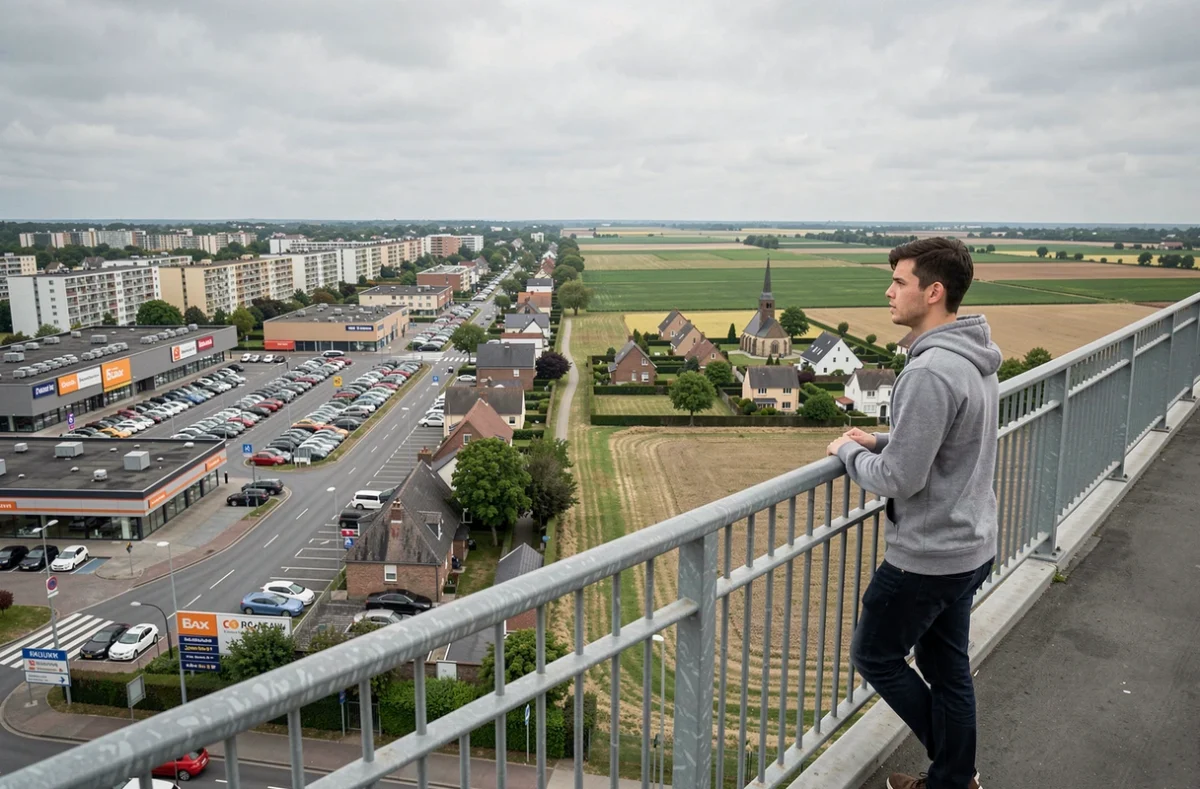
Choosing between these two living environments is not simply a matter of balancing price against space. It also involves commute times, access to services and the regulatory outlook for land. Households moving to peri-urban areas are buying a lifestyle, but also a logistical dependence that becomes more costly every year as climate constraints tighten.